23-25 June 2026, Helsinki, Finland
The CIRCULANDIA consortium officially launched its collaboration during a three-day kick-off meeting held in Helsinki, Finland, from 23 to 25 June 2026. Hosted by project coordinator CLIC Innovation, the event brought together representatives from partner organisations across Europe to establish a shared vision, strengthen cooperation, and begin the implementation of the project’s ambitious activities.
Building a Foundation for Collaboration
The kick-off meeting opened with an introduction to the project’s objectives, governance structure, working practices, and collaboration tools. Consortium members had the opportunity to present their organisations and roles within the project, creating a strong foundation for cooperation among the diverse partnership.
Partners also received guidance from the project’s European Research Executive Agency (REA) Project Officer on project implementation, reporting requirements, roles, and responsibilities. This session provided valuable insights into ensuring a successful and well-coordinated project throughout its lifetime.
Advancing the Work Packages
A significant part of the meeting was dedicated to presentations and discussions led by the Work Package leaders. These sessions introduced the objectives, activities, expected results, deliverables, and timelines of each work package.
The consortium explored topics ranging from regenerative farming and circular nutrient systems to local novel food systems, reusable packaging solutions, impact assessment, project management, and the creation of synergies with other European initiatives. Discussions highlighted the interconnected nature of the project activities and the importance of collaboration between partners and work packages.
Field Trip to Demonstration Sites
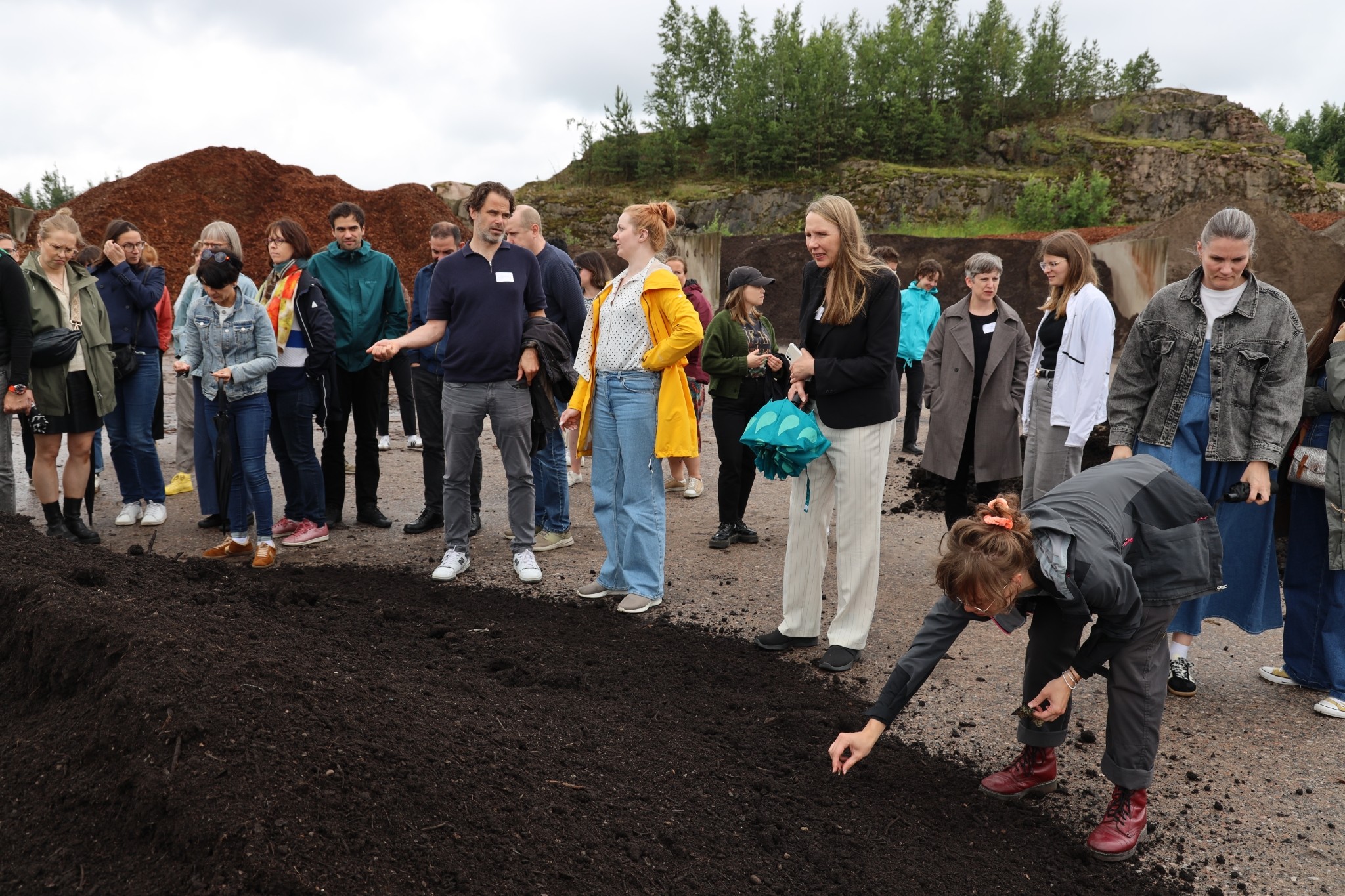
The second day of the kick-off meeting included a field trip to several demonstration sites in the Helsinki metropolitan area: Consortium partners visited Kuninkaan Lohet in Vantaa, Kekkilä-BVB’s soil production facilities, a biodiversity-focused pilot site in Kerava using circular growing solutions, and the University of Helsinki’s Viikki campus. All sites visited are represented by organisations participating in the CIRCULANDIA consortium, and the solutions showcased during the visits will serve as important starting points for activities that will be further developed, tested, and scaled throughout the project. The visits provided participants with practical insights into circular economy solutions already being implemented and offered a valuable opportunity to connect project objectives with real-world applications related to regenerative farming, circular nutrients, and biodiversity enhancement.
Focusing on Communication and Impact
The final day concentrated on communication, dissemination, stakeholder engagement, and project impact monitoring. Partners participated in workshops on project branding, communication tools, website development, and stakeholder outreach activities.
The consortium explored topics ranging from regenerative farming and circular nutrient systems to local novel food systems, reusable packaging solutions, impact assessment, project management, and the creation of synergies with other European initiatives. Discussions highlighted the interconnected nature of the project activities and the importance of collaboration between partners and work packages.
Looking Ahead
The kick-off meeting successfully established a common understanding of the project’s objectives, activities, and expected outcomes. It also provided an important opportunity for partners to build relationships, share expertise, and plan future cooperation.
With the first consortium meeting completed, CIRCULANDIA is now moving into the implementation phase, working together to develop and demonstrate circular solutions that contribute to a more sustainable future across European regions and cities.
Funded by the European Union. Views and opinions expressed are however those of the author(s) only and do not necessarily reflect those of the European Union or the European Research Executive Agency (REA). Neither the European Union nor the granting authority can be held responsible for them.